Saturday, September 28, 2019


Why is women’s right to safe and legal abortion being compromised?

Dr Shiny Varghese
Programme Manager, Population First
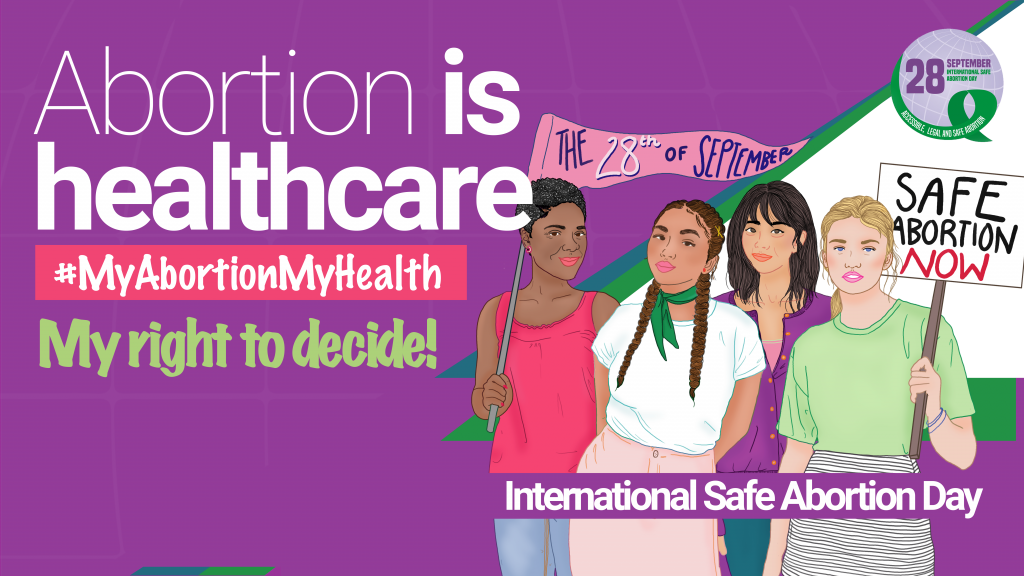


“My husband does not use any contraceptive method and I am very afraid of undergoing a sterilization operation……I did not want another child and hence wanted to get an abortion done when I became pregnant……however the doctor in the Government hospital refused to provide me with abortion services as I did not have an ultrasound report and he suspected that I had come after sex determination……I had to then go to an unqualified local health service provider to get my pregnancy terminated”, a woman from a vulnerable community of a city in Punjab, who had severe complications after an unsafe abortion.


Abortion services have been legal in India under certain conditions since the Medical Termination of Pregnancy Act was enacted in 1971.  As per the Act, abortion is legal if the continuation of pregnancy would involve risk to life of pregnant woman or cause grave physical and mental injury, including pregnancy due to rape; risk of physical and mental abnormality in child and contraceptive failure. They are legal up to 20 weeks of gestation. Pregnancy can be terminated by a registered medical practitioner registered with the State medical register.

Unfortunately in an overzealous effort to implement the Pre-Conception and Pre-Natal Diagnostic Techniques Act, the law pertaining to sex selection, implementing authorities on various occasions instead of monitoring sex determination, target abortion services, not understanding that abortion is not the cause of the problem of sex selection, it is only the consequence of it. This misunderstanding and a perceived quick fix solution, has on various occasions resulted in restricting women’s access to safe abortion services, especially second trimester abortion. Anecdotal evidence has shown that in order to curb sex selection, access to abortion is being limited by:

  • Restricting access to medical abortion, with pharmacists refusing to stock medical abortion pills.
  • Pregnancy tracking, to ensure pregnant women don’t undergo sex selective abortion, thereby compromising on a woman’s right to legal abortion for genuine reasons.
  • Suggestions that contraceptive failure should not be included as a condition for second trimester abortion.
  • Provision of abortion services only if followed by sterilization.


Reactions such as the above have increased challenges faced by women in accessing safe abortion services, with most women commonly resorting to unsafe abortions at the hands of untrained providers.

A recent study undertaken by the Guttmacher Institute brought out that around 15.6 million abortions take place in India every year (Guttmacher Institute, 2017). The study also revealed that of the total abortions done, 81% abortions were medication abortions, and with access to abortion, especially medical abortion getting restricted, a very large percentage of women seeking medical abortion would access facilities that are unsafe and illegal adding to the burden of maternal morbidity and mortality.  It is estimated that around eight per cent of maternal mortality occurs due to unsafe abortion.  Abortion related complications especially those arising from unsafe abortions are also the third major cause of maternal deaths, after haemorrhage and sepsis.


While it is extremely important to implement the Pre-Conception and Pre-Natal diagnostic techniques Act, to prevent the practice of gender biased sex selection, the Medical termination of Pregnancy Act which aims to prevent unsafe abortion should not be compromised in any manner. The two Acts should be implemented in letter and spirit without impinging on the object of each other.

This presents one aspect as to why women’s access to abortion services is restricted, however abortion services in India need further strengthening by;
  • Expanding the base of qualified and trained providers in rural areas equipped to conduct safe abortion
  • Building capacities of paramedical staff on counselling women during and after abortion
  • Undertaking communication campaigns on women’s right to safe and legal abortion
  • Conducting audits of both public and private sector facilities to ensure quality service provision
  • Investing in technology and research as well as better clinical practices

 Access to safe abortion is one of the many aspects to ensure women’s right to quality reproductive health which will also help her attain autonomy and equality. 

Monday, August 26, 2019


The Warp and Weft of Life


Swathi Chaganty


For the last five years we have been seeing the resurgence of the small-town family stories in our Hindi film industry. And its success at the box office as well as the ratings from the critics indicates that we as a nation are willing to immerse ourselves in the stories of authentic characters and relationships.

And one such character that has evolved over the years is the female lead in these stories. Once characterised as one-dimensional village or small-town girl, supporting the male protagonist, a naïve prop, a damsel in distress, has now slowly evolved into educated, progressive, ambitious and somewhat idealistic young woman. Be it Jaya from Toilet Ek Prem Katha or Bittu from Bareilly Ki Barfi, be it Sandhya from Dum Laga Ke Haisha or Sugandha from Shubh Mangal Saavdhan, these women are strong, opinionated, assertive and a welcome sight on screen. However, on the other hand, we still do have female characters like Radhika Apte’s Gayatri from Padman from a small town in Madhya Pradesh who still believe that it is better to die in shame and silence then to disclose your discomfort of menstruation; and that is the truth of the matter, and depiction of these characters is also important for us to know the long road ahead of us in terms of addressing gender based issues. But then there is another character that graced the silver screen in 2017, Mamta from Sui Dhaaga. 

On cursory glance Mamta is anything but Jaya or Sandhya. She is the head covering, kitchen bound, hardworking daughter-in-law; someone we have seen before. So much so, Anushka Sharma who plays Mamta initially did not want to play this character despite loving the script. And when asked on FC Unfiltered by Anupama Chopra, Sharma replied that she was not confident that she would be able to convince the audience of the character of Mamta since she was quite the opposite in her real life.

So, what makes this character stand out, why does Mamta stand with the Jayas and Bittus of our new small town and village girls? She might follow the rules of the milieu, fulfil the responsibilities of the house, and look homely which lends authenticity to the character from a small town in India but there is strength in her quiet presence, and she is definitely not at loss for words when the need arises. She is not the “bechaari” that Harleen Madam, a ready-made garment manufacturing owner, an interesting rather one-dimensional foil for Mamta, thinks her to be.

She is self-respecting voice of reason when inherently jovial and unaware Mauji, her husband, is insulted at a wedding by his boss. She is a leader that encourages him to make his own path—as a tailor, a trade that was his and his family’s forte once upon a time. And it is her decisiveness and persuasion that actually leads the couple to compete in the Fashion Fund in the third act. While the movie rests on the shoulders of the hero’s story arc, his relationship with his cantankerous father and ailing mother, conflict with his brother, and his struggle to make it in the tailoring business, the story of the heroine is not left behind. Mamta is a brilliant negotiator and adept at marketing and advertising much to Mauji’s surprise; not because he was indifferent to her talent or contribution, but because the “milieu” of a working-class family does not offer them the time or the privacy to get to know each other, and neither does the conservative set up help them which the movie subtly presents to us. It is through this journey of having their own business that both the characters learn about each other and their relationship develops which is crucial for the characters to succeed in their endeavour.

While the story draws our attention to the dying art of handloom, and small-town professions like tailoring and weaving in presence of the ready-made garment factories and malls, it is the realness of the characters of Mauji and Mamta, their relationship, and their trials and tribulations that give us an insight into the lives of real artisans. More often than not these artisanal tradition runs in the family where both the husband and wife contribute to the product with their skills and the decline in any artisanal industry impacts both the men and women, more so women because of the lack of financial autonomy. Apart from the relationship of the two characters the movie sensitively shows their aspirations of recognition and furthering their art going unfulfilled, and their desperation and frustration as they see their inheritance being poached by computers and machines for printing on cheap textiles that will be flooded back into those very same malls and shops they pass by every day. Both Mamta and Mauji go through a journey that knocks their naiveté down but they rise up to the challenge and make their dream come true as partners.

While there is a long way for us to go in depicting different types of layered female characters and layered relationships vis a vis their male counterparts, Mamta definitely stands among the new age rural women shaping our country’s stories on screen and her relationship with Mauji reflects the thousands of relationships that already exist among our working-class and rural professions and industries.


Friday, August 9, 2019


The Many Colours of Indian Indigenous People

Dr. Shiny Varghese

Indigenous people are those who inherit and practice unique cultures. With 370 million such people living across 90 countries, they represent more than 5000 different cultures, and speak over 7000 languages in the world. Though they form less than 5 percent of the population, they account for 15 percent of the poorest in the world. What is noteworthy is that people have retained their social, cultural, economic and political characteristics which are distinct from the societies of which they are a part of. The closeness to environment, adherence to their own culture, customs and traditional beliefs make the life of indigenous people a distinguished one. Although they remain one of the most vulnerable and marginalized groups in India, the problems of these people remain more or less the same, across the world. The protection of their rights, the land they live in, limited or no access to essential resources and their identity are some of the major issues that needs to be addressed.

The tribes of India
In India, there are 705 ethnic groups or indigenous people who are notified as Scheduled Tribes (ST’s) spread across the States and Union Territories of India. As per census 2011, their population is 104.3 million and they comprise around 9% of the total population of India with most of them residing in rural areas. Women amount to almost half of the tribal population. The sex ratio is also favourable as compared to other social groups with 990 females for every 1000 males. There are various views surrounding the status of these women in India.  Some say that the status of the women in tribal societies seems to be better than as they are characterised by egalitarian principles while others are of the opinion that it is more or less similar to the women in the general society. One of the most important determinants has been whether the women live in a matriarchal or patriarchal society. The Garo and the Khasi tribes assign the women a higher position due to the matrilineal descent and inheritance of property through female line. Even in a patriarchal society, the husband doesn’t always play a dominant role. For instance the Gond woman enjoys equal status and freedom as men in the social life, whereas on the other hand, even though the Tharu have patrilocal system of residence, wives who are known to have the knowledge of sorcery and witchcraft are dominant in the relationships. In the domestic spheres, Juang women take part in the decision-making process; however she is not consulted during important decisions.


Bodh Tribe of Ladakh
As per a study done by Veena Bhasin (2007), tribal communities too have son preference but they do not discriminate against girls by female infanticide. Though boys and girls do not have similar inheritance laws, girls are not subjected to abuse, hatred or strict social norms. They are free to participate in social events, dancing and other recreational programmes. Among Bhutias of Sikkim and Bodhs of Ladakh, there is no distinction in terms of the work done by men and women, although heavier tasks are done by men. Both men and women run small businesses and women also work as porters. There are many other privileges enjoyed by some of the tribal women of India which include freedom in selection of life partner, contributing to the local economy by participating in agriculture and other sectors, possibility of remarriage after divorce or death of husband, freedom to talk to whom so ever they please, man or woman of any caste or creed, freedom to exercise their voting rights.

However, some of the drawbacks include that a woman’s supremacy is restricted within the family domain and does not extend to social or political spheres. The religious domain has also been primarily a field for male dominance and a strategy to deprive women of public authority.
The present condition of tribal women is not an accidental affair but has evolved due to several factors in the past. By contributing economically, women have acquired social freedom which is quite remarkable in its scope. These women also toil very hard sometimes more than men, however they are not considered backward and no men tell them what to do and what not do. Even the patriarchal society, conveys respect rather than envy between the genders. The women in these areas are far more independent and powerful than modern sub-wives.

It is inspiring to hear stories of Madhumati Debbarma, Sandhya Rani Chakhma and Hatlhing Doungel who have fought against the odds and have been elected as members of the male dominated district councils in the tribal areas of northeast India. They have had to struggle against patriarchal mindsets, to encourage women participation for overall development and welfare of women in their regions.


Katkari tribes of Maharashtra
Similarly, in the areas of Shahapur Thane, there are many tribal communities residing such as the Thakurs, Katkari, Koli Mahadeo, Kokana, however Thakurs and Katkari communities form the majority. Population First through its programme AMCHI has been working with these communities for over a decade and the experiences and insights gained through the regular interaction has been very inspiring. In tribal hamlets like Palichapada, where access to water was an issue for a very long time, women with a little handholding changed the face of the village with their persistent efforts. There have been instances where women groups in these hamlets have led to increased health and education outcomes too. It is interesting to witness that women are decision makers in most of these communities.

August 9th commemorates the International Day of the World’s Indigenous Peoples. It marks the beginning of the sessions on Indigenous Populations at the UN in 1982. It is fascinating to see how lessons and experiences from tribal areas can be taken to inculcate values and morals in terms of gender equity and equality in the modern urban societies. It is essential that we work towards revitalizing, preserving and promoting indigenous cultures and share good practices through various platforms.


References

Tuesday, May 28, 2019


Sanctions Are Not the Solution

Anuja Gulati: Consultant, Population and development

At a press conference held on 25th May 2019, Yoga guru Baba Ramdev called upon the Government to implement punitive measures to contain population growth. He advocated for the denial of voting rights, contesting elections and benefits of Government schemes to the third child. He also added that if such a law is enacted people will not give birth to more children irrespective of the religion they belong to.

Punitive and coercive measures like restricting the rights of the third born are regressive, discriminatory and violate the principles of informed choice and human rights.

India has been a signatory to various International conventions and treaties like the Tehran UN Conference of Human rights in 1968, the Cairo International Conference on Population and Development in 1994, the London summit on Family Planning 2012, etc.  and in doing so, has committed to ensure that human rights are respected and protected in family planning programs. The 1994 International Conference on Population and Development which called upon States “to ensure that Family Planning programs abide by human rights norms and professional standards….. and that the provision of contraceptive services are free from coercion and discrimination, ensure informed decision making, respect privacy and confidentially and respect the dignity of all persons”, marked a paradigm shift in India’s family planning program from a target and technology driven program, to a program which focused on empowering women and emphasizing on a human rights and social development centered approach. A coercive approach like the one suggested, would contradict India’s commitment to rights based Family planning and prevent individuals from deciding freely and responsibly the number and spacing of children they choose to have.

India has made substantial progress in the last few decades in terms of expanding access to contraceptive methods. Contraceptive usage has tripled from 13% of married women in 1970 to around 54% in 2015-16. Similarly the Total Fertility Rate has more than halved from 5.7 in 1996 to 2.3 in 2016 with 24 States and Union territories achieving replacement level fertility. While family size is decreasing and people are opting for smaller families, they want to have a particular sex composition of their families with one or two boys because of the deeply entrenched preference for sons. This has resulted in gender biased sex selection. The Sex Ratio at birth is abysmally low at 898 girls per 1000 boys (SRS 2014-16). Imposing the two child norm and exercising coercive measures would further advance son preference and daughter aversion, thereby increasing sex selection and elimination.

A look at decline in fertility shows that there has been a consistent decline in fertility across the Country and across all religions. The Total Fertility Rate declined from 2.7 to 2.2 between NFHS III in 2005-06 to NFHS IV in 2015-16. During the same period, TFR among Hindus declined from 2.59 to 2.13; for Christians from 2.34 to 1.99; for Muslims from 3.4 to 2.61 and for Sikhs from 1.95 to 1.58. Thus there is a consistent fall in fertility across the Country and across religious groups and communities. The pace of decline can be enhanced by improving access to quality contraceptive services and offering full, free and informed choices. 


A study on understanding the implications of the two child norm on Panchayats, undertaken in 2003 in five States of Andhra Pradesh, Haryana, Madhya Pradesh, Odisha and Rajasthan, (Panchayti Raj and the two child norm: Implications and Consequences, Mahila Chetna Manch, January 2003) brought out that coercive policies are exclusionary and largely impact the vulnerable. Of the disqualifications due to the two child norm, Schedule caste, schedule tribe and other backward class representatives formed a very large percentage. The study also revealed that women bore a large brunt of the policy, with many women deserted or divorced after giving birth to the third child or forced into having an abortion, which in most cases was conducted in unregistered and unsafe conditions to hide the fact that she was pregnant a third time.


India with 356 million young people in the 10-24 years age group has the world’s largest youth population, comprising 28% of the total population of the Country. It is likely that this population will add to the population momentum.  Hence, India’s Family planning program should be planned in a manner to address the contraceptive needs of young people. This can be done by empowering them with information and services. Although India’s family planning program provides a cafeteria approach with a basket of choices, the reality is that female sterilization continues to be the most commonly promoted contraceptive constituting 75.3% of modern family planning methods used (NFHS IV).  The use of spacing or reversible contraceptives methods has increased but the increase has been minimal from 5.6% in 1991-92 (NFHS I) to 11.2% in 2015-16 (NFHS IV). With a fairly large proportion of girls (26.8%, NFHS IV) being married off below the legal age at marriage in India, and the unmet need among young people in the 15-24 years age group being 22% as against 12.9% of the overall unmet need, the family planning program should be positioned on addressing the needs of younger couples This could be done by:
  •          Involving men as equal partners in family planning
  •          Increasing basket of choices.
  •          Reaching out to couples and individuals with choices that best suit their reproductive intentions.
  •     Improving quality of services through effective training of service providers in counseling, seeking informed consent, protecting client’s dignity, ensuring confidentiality and privacy.
  •     Integrating of gender and rights based values and skills through pre-service and in-service programs for service providers.
  •      Building capacities and skills of service providers to provide contraceptive services to young people in an unbiased and non - judgmental manner.

Coercive measures are dysfunctional, hence family planning should be voluntary and rights based, focusing on enhancing reach, improving quality, promoting informed choices to enable couples reach their reproductive intentions.


Sunday, February 17, 2019

Happy Birthday Barbie

I just realised Barbie is older than me. She just completed 60 years. No wrinkles, no grey hair and no sagging flesh. She is the same beautiful girl- who set unachievable beauty standards for girls. It is said that given her proportions, in real life she may not be able to walk straight and may have to crawl.

Yet, Barbie is Barbie. The craze of young girls, who love to possess more and more avatars of her and the wide array of her accessories. Small girls spend hours combing her hair and dressing her up.


“Barbies are fun to play with because you can use them in different ways. Like dressing them up in different outfits and clothes. Also there are different types of barbies. Like curly haired straight haired and light skin or dark skin. Overall barbies are fun to play with and are great toys in different ways.”
- Anusha, 10 yrs

“I like barbies because you can play pretend. Also they come with many accessories which are fun to use.”

 - Ahana, 7 yrs


Having never played with dolls and toys, I never had any association with Barbie. We siblings were happy playing with boys- gillidanda,  marbles etc. May be that is the reason why my association with Barbie has been only academic- how did it influence the body image of generations of women and promote gender stereotypes.

It is estimated that every 3 seconds a Barbie doll is sold, showing how popular the toy is across the world. Starting with a price of 3 dollars the doll has had special collectors editions costing millions.

The most expensive Barbie in existence was designed by Australian jeweler Stefano Canturi. Dripping in a bevy of white and pink diamonds, the doll was sold in an auction for a whopping $302,500.”

Prof. Vibhuti Patel, well known economist and feminist has this to say about Barbie and her influence. 

“My encounter with Barbie happened in 1984 when my daughter was born and got ‘A Barbie Doll’ as a gift from my cousin at the insistence of his son. This was in addition to clay doll draped in printed saree from Khadi and Village industry gifted to her by a Gandhian friend, wooden doll from Karnataka, dancing doll from Tanjore district and cloth doll from Rajasthan.

 Indian dolls were healthy, colourful and had facial expressions of warmth. In contrast the Barbie doll was slender, had a distant look, fully made up in pink makeup and pink dress. To me, Barbie set an unrealistic standard of beauty and skin colour. My daughter learnt one thing, whenever she saw a white, young and thin woman with Golden hair, she shouted and called her BARBIE.

 After 1991, economic liberalization flooded Indian toy markets with the MADE IN CHINA Barbies with all her accessories-makeup, comb, hairpins, purses, shoes at a throwaway price of Rs. 20 for the Barbie Doll and Rs. 10 for accessories. And the Barbie Doll reached ‘poorest of the poor’ households of India and within a decade captured the rural markets too.

 Variety of Barbie’s- thin and fat, white-pink-brown-black in skin colour, golden-silver-brown-black hair colour, happy-sad-angry-cool in temperament; Anglo-Saxon, Afro American, mongoloid, Aryan, Mediterranean, African, mix-race Barbie-s in variety of costumes representing different nationalities enhanced her global appeal.

 Thus market friendliness informed by multicultural approach and cost effectiveness have made Barbie survive for 60 years as an ageless Beauty.”

Research studies have shown that Barbie dolls provide  limited scope for play and girls and boys have shared having used the dolls for Torture play and for expressing anger. (Early Adolescents’s experiences with, and views of , Barbie, TaraL Kuther and Erin McDonald, http://www.public.asu.edu/~kleong/adolescents%20barbie.pdf

Sixteen year old Sowmya has this to say about Barbie:

"Personally, I don't like Barbies because I feel that it puts a wrong idea of body shape;colour and hair in young minds. Even though Barbie has come in many other skin tones,mostly only the fair, blonde haired Barbie is available. Second reason is Barbie is expensive and it is absolutely useless and not worth the money. Third reason is  it promotes makeup. Children from a very young age want to look like Barbie by wearing  makeup.  Natural beauty is discouraged. 

You cannot play any intelligent game with Barbie. Other than dressing it up, undressing and redressing it in different costumes. After few days it becomes boring and Barbie is made to sit in a shelf.

When kids play with  Barbie in the kitchen basically Barbie cannot do anything but if they play with kitchen sets they use their imagination and make their dream dishes and act like their parents while cooking. Same case with doctor Barbie and a doctor set. When children play with Barbie they don't even develop motor skills.

Barbie cannot even  stand properly and there is nothing much to do with the accessories or props that come with Barbie be it Astronaut Barbie, kitchen set Barbie or laundry Barbie. That is why I never liked playing with Barbie. I always preferred toys like  clay modelling, quilling, rainbow loom,  building blocks, kitchen set, doctor set,etc. which helped me use my imagination."

Considering the growing negative perception among parents regarding Barbie, Mettlein 2016 has successfully repositioned Barbie as reflecting the aspirations of girls and has introduced greater variety - three new body types (curvy, petite and tall) and seven new skin tones, as well as 22 eye colors, 24 hairstyles and more diversity in the doll's fashion choices, including career wear. The ad campaign Imagine the Possibilities (https://youtu.be/l1vnsqbnAkk) focused on the range of career opportunities that the girls could explore with Barbie. Not just that, they are also successfully riding on the new wave of changing gender roles by roping in fathers as playmates for girls playing with Barbie.

With the backing of the marketing and creative teams and her sheer appeal to parents and girls, Barbie will be ruling the markets and our hearts for many many decades to come.

Happy Birthday, Barbie.


Wednesday, July 11, 2018

Malnutrition: More than just lack of food


A joint study by Assocham and Ernst & Young showed that almost 50% of the worlds under nourished children reside in India.(1) Malnourishment has been called India’s silent emergency and the need to look into this issue has never been this urgent. The cause of alarm is the high rate of infant deaths. Pankaja Munde, Minister, Women and Child Development Department admitted that a total number of 2,161 infant deaths have been recorded in 16 districts of Maharashtra in 2017. Adding to this, in the span of only 5 months, September 2017 – January 2018, a total number of 995 infants between 0 – 6 months have died (2). The numbers are alarming.
Malnutrition at such a high level implies heavy economic costs for India, as it affects a child’s productivity, cognition, reduces participation in school and further ability to contribute to the economy (3). India is one of the fastest growing economies of the world, yet has the highest number of under nourished children. The basic right to a healthy life and to simply live is a fundamental one. The fact that this is snatched away from children and infants due to various structural and social barriers is unacceptable and requires immediate redressal. Although the battle to tackle this issue has been an uphill one with little visible progress, it has been uneven and the structural reasons causing malnourishment remain unaddressed.
A common misconception held by most people about child malnutrition is: food insecurity is the only cause for malnutrition (4), often placing the onus upon the mother or the child for not ‘eating well’. However, the reasons resulting in such high levels of malnutrition are varied and go beyond just the consumption of food. But unfortunately, most interventions are based on providing food rather than addressing other determinants.
The data from the National Family Health Survey (2015 – 16) showed three key factors of difference in districts with high and low levels of child malnutrition. These are: the status of women, diets fed to children and access to toilets (5). Lack of education, health awareness, sanitation and infrastructure form the basis of child under nourishment. It is also important to recognize that malnourishment is very much a gendered issue (6) stemming from the patriarchal set-up of society. The NFHS survey also revealed that malnutrition is higher in girls especially from rural areas and the scheduled castes and tribes are more susceptible to malnutrition.
Malnourishment affects women more than men due to specific nutrition requirements of women during adolescence, pregnancy and lactation. The nutrition deprivation in women perpetuates a cycle of deprivation in children. Under nourished girls grow up to become under nourished women who then give birth to undernourished children. The onus often lies with the woman to provide nutrition for the child, however she is not equipped to do so due to skewed power relations within the family, food distribution practices, lack of economic means and health awareness.
Integrated Child Development Services program, is the government’s flagship program to tackle child malnutrition. It has sustained for over 30 years and has been successful in many ways. However, it has been unsuccessful in reversing the adverse effects of child malnutrition due to the emphasis it lays on food supplementation and distribution.
There are gaping holes in in the implementation of the ICDS policies. There are no consistent mechanisms of identifying children with malnutrition which results in denial of special care and support to Moderately/Severely malnourished children. There is a lack of and poor distribution of appropriate and adequate supplementary nutrition. Often, adequate medical support is not provided at the right time. Moreover, cultural differences of different communities and groups are not taken into consideration by the health officials. It is important to also note the rampant under reporting of malnutrition, due to the misdirected monitoring system which puts the blame completely on the Anganwadi worker for the number of Malnutrition cases, thus absolving the family, community and the medical service providers and institutions of their role in addressing issues related to malnutrition (7).
Interventions on creating awareness around good caring behaviors for infants and children require community and familial engagement and require the training of grass root workers in order to maximize impact. Investments should be redirected towards younger children (between 0 – 3 years), the mother’s feeding and caring behaviors, improving household sanitation and strengthening access to health care. Economic growth cannot alone address these problems. Malnutrition is a social phenomenon which must be addressed by changing mind sets, scaling up of health, nutrition, education and infrastructural interventions.


REFERNCES:


See Also: 

Wednesday, April 25, 2018


How long? How often? 
Some questions to assess if legal reform is enough to tackle the culture of violence against women in India

The last few weeks have been traumatic for most of us, with sordid and heart wrenching details surfacing about the Kathua and Unnao rape incidents. The brutality, depravity and brazenness of the perpetrators shook the conscience of the nation. Protest marches have been heldall over the country. After the Prime Minister was criticised from all quarters for not responding conclusively to the public’s angst, the government has briskly introduced an ordinance to award death penalty to those convicted of raping childrenbelow the age of 12.

For those who feel that this is the rightful consummation of public anger, we ask the following questions: The criminal law was amended in 2013 post the Nirbhaya case, again partly owing to public pressure, expanding the understanding of rape and doling out tougher punishment to perpetrators. What is happening with the implementation of these amendments? Why is it that we as citizens have to repeatedly come out onto the streets to question how the systems work; to demand that the cases are filed, the arrests are made? Why can’t the systems run on auto pilot? Both Kathua and Unnao incidents give some insights into why the systems dont work, despite legal reforms. It isbecause they are subservient to those who have influence and clout. When the high and mighty are the perpetrators, the systems are manipulated to deny justice.Even seemingly independent institutions such as the National Commission for Women and the Human Rights Commission maintained a deafening silence on the cases for a long time. This is unnerving considering both these bodies are vested with the power to intervene. Is it because of mere ineptitude or the large scale politicization of these bodies?

Another set of questions to ask isregarding the innumerable cases that are reported in the papers almost on a daily basis, equally heinous and barbaric, that go unnoticed. There may be many more that are not registered or reported for fear of stigma or fear of the system. How many of the cases registered actually go through the complete judicial process? How many cases are withdrawn?How many cases result in acquittals because of lack of evidence or witnesses turning hostile? Although the National Crime Records Bureau (NCRB) reports compilethe statistics, there is no detailed reporting on the same. The conviction rate of rape cases in 2016 according to the NCRB reportwas just 25.5% in 2016. Why was this so? Who is supposed to monitor charge-sheeting and acquittals due to lack of evidence? How do we build accountability of the prosecution and judicial system? These are the questions that we need to ask ourselves.While tougher laws and greater punishment might act as deterrents, its more important to work towards sympathetic responsive systems and effective convictions to address the issue holistically.

Moreover, while it is necessary to raise our voice when an unjust incident happens, it should also serve as apivot for introspection about why it is happening and where we as a country are heading. The Kathua case epitomises the use of rape as a means of violence to terrorise a community into silence for political and economic gains. The main accused Sanji Ram proudly declared the same.We need to highlight and address the issue of aggression against womens bodies as a tool to make political points or, as in the Kathua case, to stress communal superiority or right over land. It is also important to seek solutions to tackle the rape culture in the nation, which exposes even infants to sexual violence, hitting at the more basic mindset and behavioural aspects as well as the patriarchal roots of the issue. What is it that makes a young man rush to a crime site to plead to rape a bruised, battered and drugged 8 year old?

Further, in addition to the gendered aspects of the issue, anothercrucial collectiveintrospection needs to take place regarding why it is becoming so easy to use fear and terror to address social issues in general.Juvenileperpetrators were involved in both the Kathua and Nirbhaya cases (alongwith many other cases of violence including themob lynching incidents over the past few years). What is it that is making our youth so vulnerable to radicalisation, whether right wing or left wing? Why is there such a dearth of conversations, dialogue and critical thinking among the youth? Why are they not developing a sense of respect and empathy?

A lot of the responsibility for the increasing violence and aggression among the youth, and their vulnerability to indoctrination lies with our education system which is now referred to as theeducation business. This factory-model of education is reinforcing unquestioning allegiance to authority, wiping out compassion and integrity. In an education system which workssolely for better results in examinations and material acquisition, which makes children slaves to rote learning, which deprives children of opportunities to play and bond with others, which ignores instilling the right values and ethics, which does not provide space for healthy disagreements and negotiations, we cannot hope to have children who can resist indoctrination. All through their lives they are being indoctrinated - to be mere followers and not leaders.The disintegrating networks of physical neighbourhoods and communities on the one hand, and the increasing influence of reactionary and compartmentalizing social media on the other further compound the problem.

We also need to look at government programmes such as Skill India more critically. The question is: are we creating an environment wherein youth can contribute productively and creatively to society or are we merely facilitating corporates and multinationals to create a vast pool of semi-skilled cheap workforce? While the number of people being skilled is important, the quality, content and long term career development aspects of skilling is much more crucial. Whether it is a shop floor assistant or delivery staff of a major retailer, what opportunities do they have to fulfil their long-term growth needs?How do they deal with the conflict between their rising aspirations and the ground realities?It is time we work towards inclusive  and holistic development programs rather than target based initiatives.

All-in all, public pressure may lead to piecemeal government responses to specific publicized cases. But till the time we ponder about some of the deeper questions as a society, we may continue to go out onto the streets once in a while and get back to our comfort zones; oblivious of the world we are creating - making the vulnerable more vulnerable and the powerful more brazen.


Dr. A. L. Sharada, Director Population First
 Ms. Maggie Paul, Senior Manager, Gender Trainings and Research